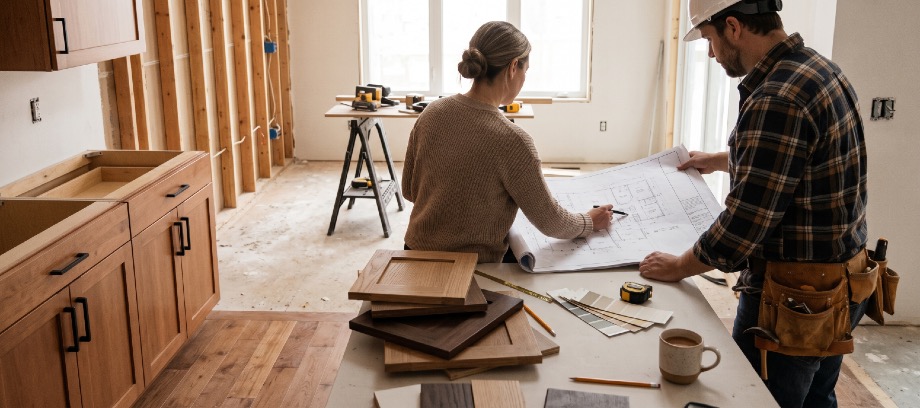
What is a Design-Build Firm vs. a General Contractor?
In short: a design-build firm handles your design and your construction under one roof, with one contract and one team from the first sketch to the final walkthrough. A general contractor picks up the project after the design is already done, usually by a separate architect or designer you've hired on your own. That one difference changes almost everything else about how the project unfolds.
The Three Paths Homeowners Usually Consider
Most people planning a remodel end up choosing between three routes, whether they realize it or not.
Acting as your own general contractor. This can save money on paper, but it means you personally coordinate every trade, track every material order, chase down anything that arrives damaged or short, and manage separate contracts with each vendor. It's a full-time job layered on top of your actual full-time job.
Hiring a general contractor. A GC typically brings in subcontracted trades — designers, carpenters, plumbers, electricians, tile setters — to execute a plan that's often already been drawn up separately. The catch is that these are frequently separate businesses with separate schedules, so when one trade runs behind, everyone else waits. If costs run over or a change is needed mid-project, you can end up in the middle of a disagreement between your designer and your contractor about who's responsible.
Hiring a design-build firm. Design and construction happen under one contract, with one team that already knows how to build what it designs. There's no handoff between a designer who drew the plan and a builder who has to figure out how to execute it.
Why the Single-Contract Model Actually Matters
The biggest practical difference shows up in timeline and accountability. Because a design-build team prices the design for buildability before anything is signed, change orders are rare — the cost surprises that come from a GC discovering problems at bid time simply don't happen the same way. Industry research on project delivery methods shows design-build consistently outperforming traditional sequential building on cost control, schedule, and delivery speed, with some comparisons showing design-build timelines running up to a third faster than the traditional design-then-bid-then-build process.
That speed comes from overlap. In a traditional model, design has to finish completely before bidding starts, and bidding has to finish before construction starts — three sequential phases, each one waiting on the last. In a design-build model, pre-construction planning can begin while design is still being finalized, because the same team is doing both.
There's also just one person to call. When something needs to shift — a material's back-ordered, a wall turns out to have plumbing nobody expected — you're not stuck relaying messages between a designer and a contractor who don't work for the same company and don't always agree on who should absorb the fix.
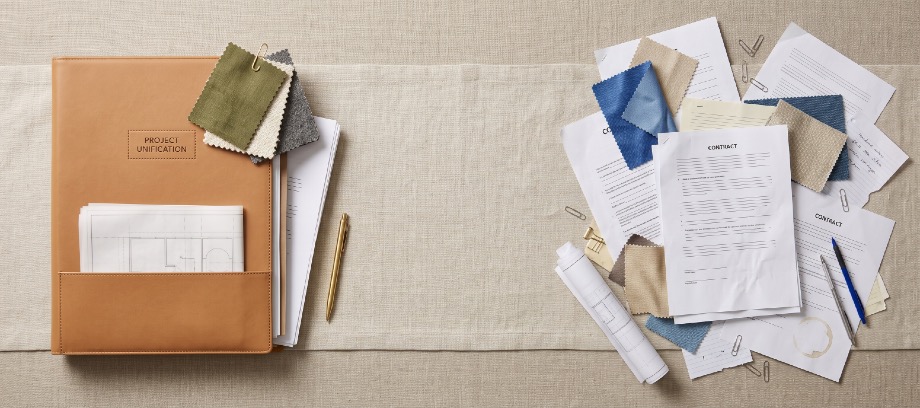
Where Design-Build Isn't Always the Right Fit
If you're doing something small — swapping a vanity, updating a laundry room — the full design-build process can be more structure than the job actually needs. And design-build generally asks you to finalize decisions before construction starts, which keeps budgets and schedules on track but leaves less room for late changes once work is underway.
That's actually part of why DreamMaker separates smaller, more contained projects into their own simplified process rather than running everything through the full design-build pipeline. A countertop swap doesn't need the same structure as a full kitchen gut. What matters is getting matched to the right process for the size of the project, not forcing every job through the same funnel.
What This Looks Like Day to Day
At DreamMaker, that single-team structure means your designer and your production team are working from the same information from day one. There's no version where the person who drew your kitchen doesn't know why the electrician needs three extra days, because they're on the same team and looking at the same schedule.
The process generally moves through an initial design consultation, a home visit, a concept review meeting, contract signing, and then installation. Because material lead times and production scheduling are considered from the very beginning rather than discovered later, the timeline you're given up front tends to hold up better than one assembled by piecing together separate bids after the fact.
Which Is Right for Your Project?
If you want one point of contact, fewer scheduling surprises, and a team that's already coordinated before your project starts, design-build is usually the better fit — especially for kitchen, bathroom, and basement remodels with real design decisions involved. If you're doing a small, well-defined project with no design complexity, a general contractor or a simplified service model might be all you need.
DreamMaker Bath & Kitchen provides kitchen remodeling, bathroom remodeling, basement remodeling, and full-service whole-home design-build remodeling to homeowners in Ann Arbor, South Lyon, and the surrounding communities. If you're not sure which path fits your project, that's exactly the kind of question worth asking before you sign anything.
Schedule a design consultation to talk through your project and find out which process actually makes sense for it.
Let's discuss